
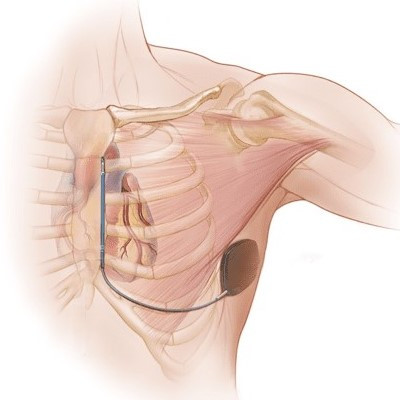
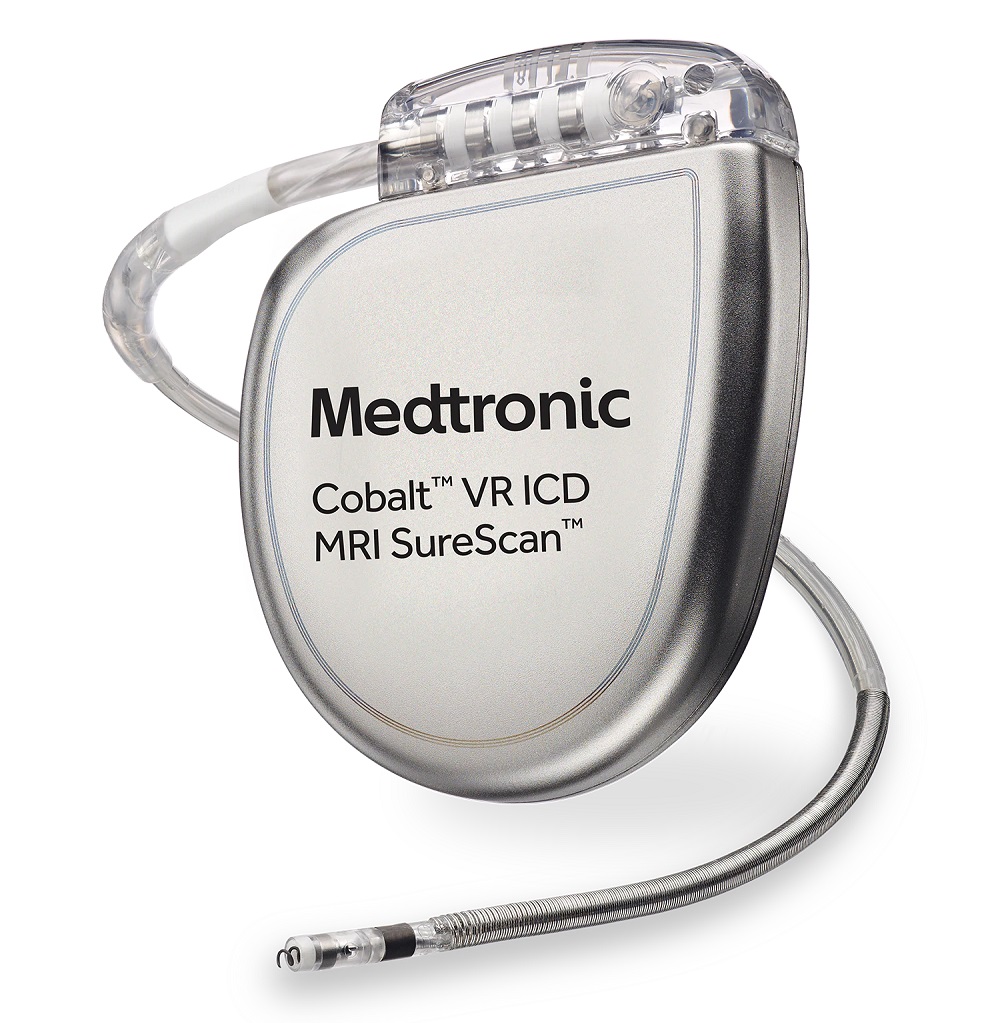
An implantable cardioverter defibrillator (ICD) is a small electronic device implanted in the body to monitor the heart rhythm continuously. It recognises and, when needed, promptly treats dangerous ventricular arrhythmias such as ventricular tachycardia (VT) and ventricular fibrillation (VF), which can lead to sudden cardiac death.
An ICD is not implanted simply because someone has “arrhythmias”. The decision follows an individual assessment of the risk of serious ventricular arrhythmia and sudden cardiac death, considering the underlying heart disease, heart function, previous arrhythmias, age, other medical conditions and overall prognosis.
There are two main types of implantable defibrillator:
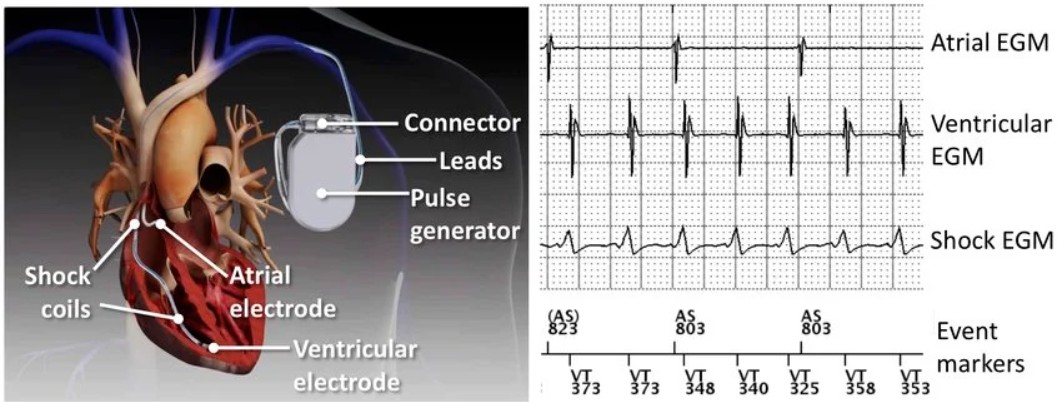
- Transvenous ICD (TV-ICD): one or more leads pass through a vein into the heart.
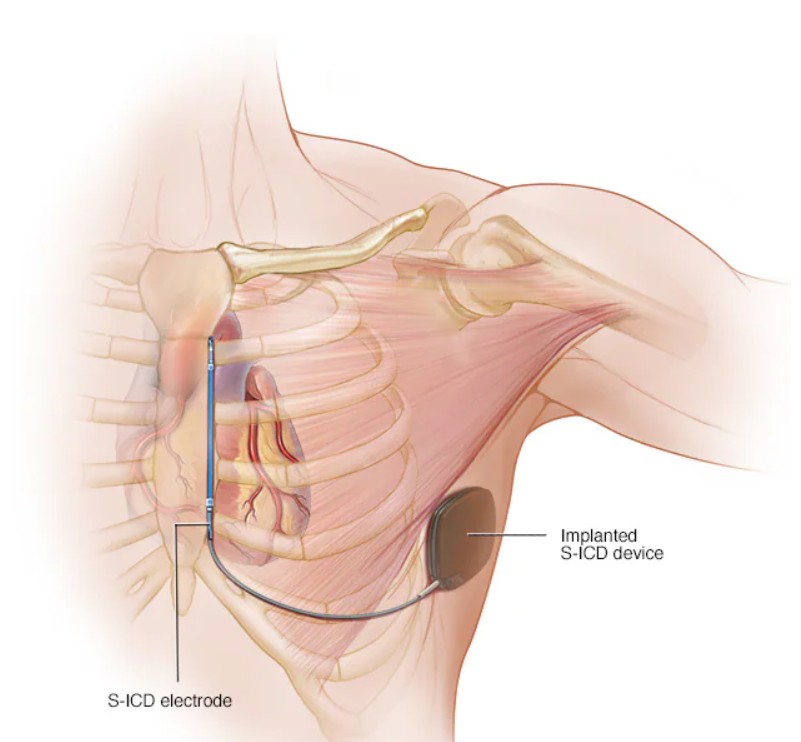
- Subcutaneous ICD (S-ICD): both the lead and generator lie beneath the skin, with no lead inside the veins or heart.
The choice is individualised for each patient.
What you need to know, organised by topic
Open the topics you would like to read. The complete guide remains available in expandable sections.
01How it works and who may benefit+
How does an ICD work?
The ICD continuously records the heart rhythm. If it detects a dangerously fast ventricular arrhythmia, it can intervene automatically.
Depending on the device and arrhythmia, treatment may include:
Antitachycardia pacing – ATP
A transvenous ICD can often stop VT by delivering a short series of very rapid, painless electrical impulses, without a shock.
This is called antitachycardia pacing (ATP) and is usually not felt by the patient.
Cardioversion / defibrillation
If the arrhythmia is very fast or does not stop with ATP, the ICD can deliver a stronger electrical shock to restore a normal heart rhythm.
The shock is very brief but can be strongly felt if the patient is conscious.
Pacing
Most transvenous ICDs can also act as pacemakers when the heart rate becomes too slow.
A conventional S-ICD does not provide long-term pacing for bradycardia or antitachycardia pacing (ATP). It is therefore unsuitable when these treatments are expected to be needed.
When might an ICD be needed?
An ICD may be implanted for secondary or primary prevention of sudden cardiac death.
Secondary prevention
This applies to patients who have already experienced a serious ventricular arrhythmia, such as:
- cardiac arrest due to VF or VT,
- sustained VT with haemodynamic instability,
- certain cases of sustained VT in patients with structural heart disease.
Before implantation is considered, the team assesses whether the event had a fully reversible cause, such as a severe temporary electrolyte disturbance or another acute condition.
Primary prevention
Other patients have not had a cardiac arrest but have underlying heart disease associated with a substantially increased future risk of life-threatening ventricular arrhythmia.
Examples may include:
- ischaemic cardiomyopathy following myocardial infarction,
- dilated or other non-ischaemic cardiomyopathy,
- significantly reduced left ventricular ejection fraction despite appropriate medical treatment,
- hypertrophic cardiomyopathy with specific high-risk features,
- arrhythmogenic cardiomyopathy,
- certain inherited electrical heart conditions, such as Brugada syndrome, long QT syndrome or catecholaminergic polymorphic VT,
- other specific heart conditions where risk assessment indicates a significant likelihood of sudden cardiac death.
Having a particular diagnosis does not automatically mean an ICD is required. The decision is based on specific criteria and individual risk assessment in accordance with international guidelines.
02Transvenous ICD or S-ICD?+
Transvenous ICD
In a conventional transvenous ICD, the generator is usually placed beneath the skin below the collarbone.
One or more leads pass through the veins into the heart chambers.
Depending on the patient's needs, the device may be:
- a single-chamber ICD,
- a dual-chamber ICD,
- or CRT-D when cardiac resynchronisation therapy is also indicated.
Advantages of a transvenous ICD
A transvenous ICD can:
- treat VT with ATP, often without a shock,
- provide pacing for bradycardia,
- be combined with cardiac resynchronisation therapy when indicated.
Limitations
Because the lead lies within the veins and heart, there are specific short- and long-term lead-related risks, including displacement, malfunction, venous obstruction and infection.
Subcutaneous ICD – S-ICD
The S-ICD was designed to protect against dangerous ventricular arrhythmias without placing a lead inside the heart.
The generator is usually positioned on the left side of the chest, with a lead running beneath the skin alongside the breastbone.
The entire system therefore remains outside the heart and blood vessels.
This avoids important complications specifically associated with intravascular leads. Randomised trials have shown that the S-ICD is an effective alternative to a transvenous ICD in appropriately selected patients who do not need pacing or ATP.
Who may be particularly suitable?
An S-ICD may be an attractive option for patients:
- who need protection from sudden cardiac death but do not need pacing or ATP,
- who are younger and for whom the long-term presence of an intravascular lead is an important consideration,
- with difficult or inadequate venous access,
- in whom preserving the venous system is desirable,
- with an increased risk of intravascular device infection,
- following removal of an infected transvenous system, in selected cases.
When might an S-ICD be unsuitable?
An S-ICD is usually not preferred when there is a significant current or anticipated need for:
- permanent pacing for bradycardia,
- antitachycardia pacing (ATP),
- cardiac resynchronisation therapy (CRT).
ECG screening is also performed before implantation to confirm that the patient's electrical signal morphology is suitable for reliable sensing by the subcutaneous system.
How is the choice between a transvenous ICD and S-ICD made?
No single device is ideal for every patient.
The choice considers:
- the underlying heart disease,
- the type of ventricular arrhythmia,
- the likelihood of needing ATP in the future,
- pacing requirements,
- a possible indication for CRT,
- age and life expectancy,
- previous device infections,
- venous anatomy,
- other conditions and previous procedures,
- patient preferences.
Selecting the appropriate system is therefore part of an individual discussion between the patient and the specialist cardiologist–electrophysiologist.
03Preparation and implantation+
Preparing for implantation
The indication and most suitable device type are fully assessed before the procedure.
Depending on the case, assessment may include:
- an ECG,
- an echocardiogram,
- blood tests,
- kidney function and electrolyte tests,
- review of current medication,
- review of previous imaging or electrophysiology investigations,
- specific ECG screening if an S-ICD is being considered.
Management of anticoagulant and antiplatelet medicines is particularly important. Do not stop them without specific medical instructions, as the appropriate strategy depends on the medicine and why it was prescribed.
You will also receive instructions about:
- fasting,
- medicines to take on the morning of the procedure,
- diabetes management, if applicable.
Preventive antibiotics are given according to the relevant protocols to reduce infection risk.
How is a transvenous ICD implanted?
The procedure takes place in a specially equipped room, with continuous monitoring of heart rhythm, blood pressure and oxygen levels.
Local anaesthesia and sedation are usually used to keep the patient comfortable.
A small incision is usually made below the left collarbone and a pocket is created for the generator.
A lead is advanced through a vein under X-ray guidance to the correct position in the heart. If a second lead is needed, it is placed in a similar way.
The leads are carefully tested to confirm:
- correct positioning,
- good sensing of electrical signals,
- effective pacing where required,
- system stability.
They are then connected to the ICD generator, which is placed beneath the skin, and the incision is closed.
How is an S-ICD implanted?
An S-ICD does not require venous access or a lead inside the heart.
A pocket is created for the generator on the left side of the chest. The lead is placed beneath the skin alongside the breastbone through small incisions.
Because of the device position and the creation of the subcutaneous lead tunnel, deeper sedation or general anaesthesia may be used, depending on the patient and the centre's protocol.
The system is then checked thoroughly, including its ability to sense the heart's electrical signal correctly.
04Recovery, wound care and safety+
What happens after implantation?
After the procedure, monitoring includes:
- heart rhythm,
- blood pressure,
- the operation site,
- possible bleeding or a haematoma,
- device function.
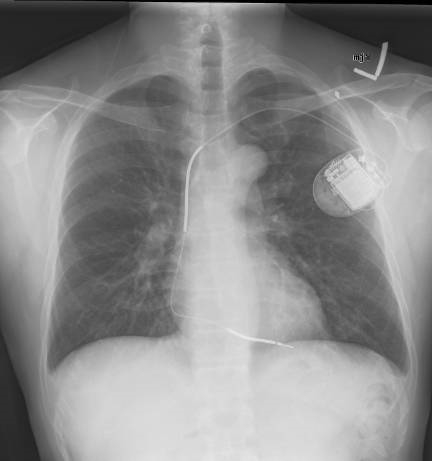
After transvenous implantation, a chest X-ray is usually performed to check lead position and exclude complications such as pneumothorax. The device is checked and programmed before discharge.
Depending on the patient's condition and the procedure, discharge may be on the same or following day.
Wound care
Some discomfort, tightness or tenderness around the device is expected during the first few days.
Minor bruising or mild swelling may also occur.
Keep the area clean and follow the discharge instructions about dressings and when the incision can get wet. A waterproof dressing may allow earlier showering; otherwise the incision usually needs protection for longer.
Contact the clinical team if you notice:
- increasing redness around the incision,
- significant or increasing swelling,
- fluid or pus leaking from the wound,
- persistent bleeding,
- opening of the incision,
- fever or shivering,
- gradually worsening pain.
Early recognition of a possible device infection is particularly important.
Arm movement after a transvenous ICD
Complete immobilisation of the arm is not recommended and can cause shoulder stiffness.
Gentle, normal movement is encouraged. Initially, however, avoid heavy lifting, sudden movements and activities that strain the device area, following your doctor's individual instructions.
After healing, a permanent change in how you use your arm is usually unnecessary.
What are the risks?
ICD implantation is an established procedure and is usually performed without significant complications.
As with any invasive procedure, potential risks remain.
Risks shared by both ICD types
These include:
- bleeding or a haematoma,
- pain or discomfort at the device site,
- infection,
- delayed wound healing,
- device migration or erosion,
- device or lead malfunction,
- the need for another procedure,
- inappropriate device therapy or shocks,
- reactions to medicines or anaesthesia.
Additional risks of a transvenous ICD
Because venous access and a lead inside the heart are required, additional risks include:
- pneumothorax,
- haemothorax,
- lead displacement,
- perforation of the heart wall and, less commonly, cardiac tamponade,
- venous thrombosis or obstruction,
- long-term lead wear or fracture,
- intravascular infection.
Specific features of the S-ICD
Because the system lies entirely outside the heart and vessels, it avoids risks associated with transvenous lead placement, such as pneumothorax, heart wall perforation and long-term intravascular lead complications.
However, complications associated with the larger subcutaneous system may occur, including a haematoma, discomfort, infection or cardiac signal sensing problems.
05Follow-up and everyday life+
ICD follow-up
An ICD requires follow-up throughout its lifetime.
At follow-up, it communicates wirelessly with a specialised programmer. The check is painless and provides detailed information about:
- battery status,
- the leads,
- heart rhythm,
- any arrhythmia episodes,
- any ATP therapies or shocks,
- device settings.
The first scheduled check is usually 4–6 weeks after implantation, followed by regular reviews according to the device type and the patient's condition.
Many modern devices also use remote monitoring, transmitting information from the ICD to the monitoring centre to help identify arrhythmias or technical problems promptly.
What happens when the battery runs low?
An ICD battery lasts several years. Its lifespan depends on:
- the device type,
- programming,
- how often pacing is needed,
- the number of therapies or shocks delivered.
The battery does not run out suddenly. The device gives advance warning that replacement will be needed.
At the appropriate time, a generator replacement is performed. Leads are not automatically replaced if they are functioning normally.
What should I do if my ICD delivers a shock?
A shock does not necessarily mean there is a problem with the ICD. It may mean that the device has recognised and treated a dangerous arrhythmia.
If you feel one shock and are completely well afterwards
Contact your doctor to arrange an ICD check and establish why treatment was delivered.
If you experience repeated shocks or also have:
- chest pain,
- breathlessness,
- severe dizziness,
- loss of consciousness,
- persistent rapid palpitations or significant illness,
seek immediate medical assessment / emergency help.
Living with an ICD
After full recovery, most patients can return to most everyday activities.
The ICD works continuously without requiring any action from the patient.
You will receive a device identification card, which is useful to carry with you.
Mobile phones and electrical appliances
Most everyday household electrical appliances can be used safely.
Avoid placing a strong magnet or mobile phone directly over the device, and follow the manufacturer's instructions about distance from particular electronic equipment.
Airports
Patients with an ICD can travel by air. Inform security staff that you have an implanted cardiac device and show your identification card.
MRI scans
Many modern systems are MRI conditional, meaning MRI can be performed under specific conditions.
Do not assume that every ICD or every generator–lead combination is suitable for MRI. The specific system must be checked and a dedicated protocol followed before any scan.
Medical and surgical procedures
Tell your doctor that you have an ICD before any procedure or treatment, as some medical equipment may require special precautions or temporary device reprogramming.
Driving
A temporary driving restriction may be required after ICD implantation. Its duration depends on the reason for implantation and whether serious arrhythmias or device therapies have occurred before or afterwards.
Advice must be individualised according to the clinical situation and applicable regulatory requirements.
06Frequently asked questions and individual choice+
Frequently asked questions
Is an ICD the same as a pacemaker?
No.
A pacemaker mainly treats excessively slow heart rhythms.
An ICD can also recognise and terminate dangerous ventricular tachyarrhythmias and provide defibrillation.
Transvenous ICDs usually include pacemaker functions.
Will I feel the device?
Some tenderness or tightness is normal in the first few days.
After healing, most patients become accustomed to the device. It may be palpable beneath the skin, particularly in slim people.
Will I feel a shock?
If you are awake, a shock is usually felt as a very brief but strong jolt or thump in the chest.
During very fast arrhythmias, you may lose consciousness before treatment and not feel the shock.
Can an ICD prevent every sudden death?
No. An ICD provides very important protection against specific dangerous ventricular arrhythmias, but does not treat the underlying heart disease or prevent every possible cause of cardiac death.
Other cardiac treatment therefore continues as usual.
Do I need to continue my medication after implantation?
Usually, yes.
An ICD does not replace treatment for heart failure, coronary artery disease or the underlying arrhythmia.
Some patients also need antiarrhythmic medicines to reduce ventricular arrhythmias and the need for device therapies.
Which ICD is better: transvenous or S-ICD?
There is no single answer for every patient.
A transvenous ICD offers ATP and pacing. An S-ICD avoids a lead inside the heart and vessels.
The appropriate choice depends on the heart condition, likely future arrhythmias, pacing requirements and individual patient characteristics.
Individual assessment before implantation
The decision to implant a defibrillator is not based solely on ejection fraction or one test.
It requires an overall assessment of:
- the cardiac condition,
- arrhythmia history,
- heart function,
- imaging,
- the ECG,
- possible genetic or inherited factors,
- the effectiveness of current treatment,
- the individual's overall risk of sudden cardiac death.
When an ICD is indicated, choosing the appropriate device for the individual patient is equally important, to provide the necessary protection with the best possible balance of benefit and risk.
This is general information. The indication for implantation, the choice between a transvenous ICD and S-ICD, and instructions before and after the procedure are individualised for each patient.