
Interventional services

Electrophysiology Study

Specialist invasive investigation of the mechanism of an arrhythmia.

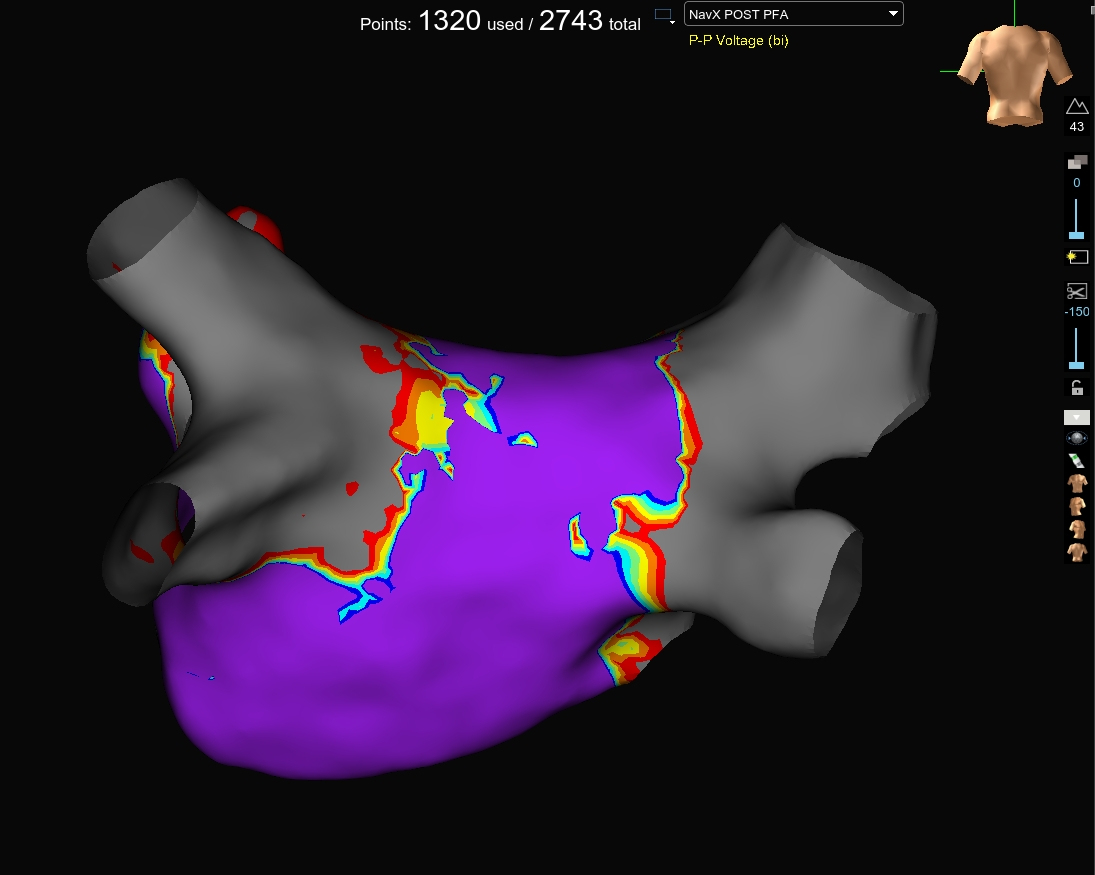
Three-dimensional electrophysiological mapping of the heart
Understanding the service

What is it and what is its purpose?

An electrophysiology study precisely examines the heart's electrical function. Thin catheters are passed through blood vessels to the heart to record electrical signals. When needed, the suspected arrhythmia is induced in a controlled setting to identify its mechanism.

The study clarifies where an arrhythmia starts and how it is sustained. This supports a more precise diagnosis and helps guide the choice between observation, medication, ablation or device implantation.

How it is performed

  1. 01

    Review of the medical history, ECG and available recordings.

  2. 02

    Catheter placement under local anaesthesia, with sedation where appropriate.

  3. 03

    Recording, diagnosis and consideration of ablation when a suitable substrate is identified.

The patient experience

What to expect, step by step

Understanding the procedure helps you arrive better prepared and with greater confidence.

Three-dimensional electrophysiological mapping of the heart
Catheters record electrical signals from different areas of the heart to create a precise map of the arrhythmia.
01

On the day of your investigation or treatment

The procedure takes place in an electrophysiology laboratory. With local anaesthesia at the puncture site and mild sedation when needed, thin catheters are usually passed from the femoral vein to the heart. You are monitored continuously and may briefly feel your familiar rapid heartbeat when the arrhythmia is induced in a controlled manner.

BEFORE

Preparation

Individual instructions are provided about fasting and medication. Do not stop any medicine without clear medical advice.

AFTER

The first few hours

After catheter removal, pressure is applied to the puncture site, followed by rest and observation. Rhythm, blood pressure and the groin are checked before discharge instructions are given.

RETURN

Back to everyday life

Walking and light activity resume gradually according to the team's advice. Heavy lifting and strenuous exercise are usually avoided for a few days. Return to work depends on your occupation and whether ablation was also performed.

Important

An electrophysiology study may be combined with ablation, depending on the findings and the patient's consent. Your treating team's individual instructions always take priority over the general information on this page.

Frequently asked questions

Practical answers before your appointment

Will it hurt?

The puncture or incision site is numbed. You may feel a brief sting, pressure or palpitations during mapping. Sedation and pain relief are tailored to the procedure and your needs.

Should I stop my medication?

Not without specific medical instructions. Anticoagulants, antiarrhythmics, diabetes medicines and other treatments may require special management, tailored to each patient and procedure.

When will I know the result?

The main findings and immediate outcome are usually explained before discharge. Final assessment includes your recovery and scheduled follow-up.

When is urgent help needed?

Severe or worsening chest pain, severe breathlessness, fainting, bleeding that does not stop or rapidly increasing swelling at the access site need immediate assessment. Follow your discharge instructions or call 112.

Information sources

Based on reliable patient information

The content has been adapted for patients and clinical practice. It is not individual medical advice.

Individual assessment

Discuss whether this service is right for you.

Assessment by Dimitrios Gerontitis, cardiologist and arrhythmia specialist, in Chalkida or Marousi, Athens (IASO). View practice telephone numbers and addresses.

Book an appointment online