
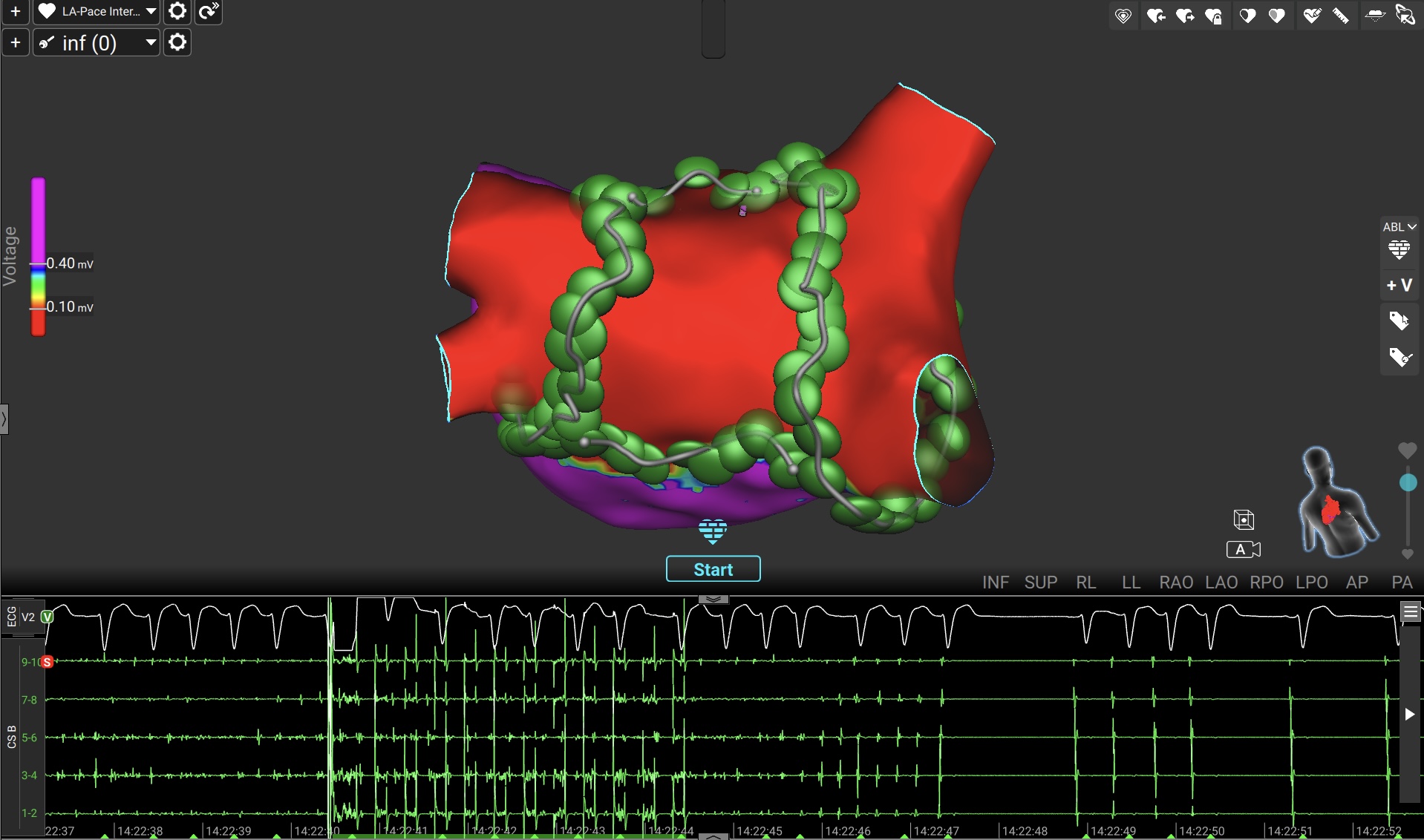
Atrial fibrillation ablation (AF ablation) is a minimally invasive treatment performed by a specialist interventional electrophysiologist. It aims to reduce or eliminate episodes of atrial fibrillation and maintain a normal heart rhythm.
The procedure uses thin catheters introduced through veins in the groin and advanced into the heart.
The main objective is pulmonary vein isolation (PVI): electrically isolating the pulmonary veins, where the electrical impulses that trigger atrial fibrillation often originate.
Choose a topic
Explore the complete guide in expandable sections for easy reading.
01Who may benefit?+
Ablation may be a treatment option for patients with paroxysmal or persistent atrial fibrillation, particularly when:
- symptoms such as palpitations, breathlessness, fatigue or reduced exercise tolerance are significant,
- antiarrhythmic medicines are ineffective,
- medication causes side effects,
- the patient prefers a rhythm control strategy aimed at reducing the need for long-term antiarrhythmic medication,
- atrial fibrillation affects heart function or is associated with heart failure.
In selected patients, particularly those with symptomatic paroxysmal atrial fibrillation, ablation may also be offered as an initial treatment option.
The decision is always individualised. It takes account of the type and duration of the arrhythmia, symptoms, heart structure and function, other medical conditions, previous treatments and the patient's preferences.
02What can ablation achieve?+
The main aim is effective heart rhythm control.
In appropriately selected patients, it may provide:
- a substantial reduction in, or elimination of, episodes of atrial fibrillation,
- improvement in arrhythmia-related symptoms,
- better quality of life and functional capacity,
- a reduced need for, or discontinuation of, antiarrhythmic medicines,
- fewer electrical cardioversions or hospital admissions,
- improved heart function and prognosis in selected patients with heart failure.
Ablation primarily aims to control the arrhythmia. It does not automatically mean that anticoagulation can be stopped: this depends on the individual's risk of thromboembolic events.
03Preparing for the procedure+
A detailed cardiology and arrhythmia assessment is performed before ablation.
Investigations may include:
- an electrocardiogram (ECG),
- an echocardiogram,
- blood tests,
- assessment of kidney function,
- review of anticoagulant and antiarrhythmic medication,
- a transoesophageal echocardiogram when needed to exclude a clot in the left atrium or left atrial appendage.
In some cases, CT or another appropriate imaging technique may also be used to assess the anatomy of the left atrium and pulmonary veins.
Anticoagulation
Careful management of anticoagulation is particularly important for procedural safety.
In most cases, ablation is performed without a substantial interruption of anticoagulant treatment, following the appropriate peri-procedural protocol.
Do not stop your anticoagulant medicine on your own.
You will receive specific instructions about your anticoagulant, antiarrhythmic and other medication.
Fasting
You will need to fast before the procedure. Clear instructions will explain when to stop eating and drinking, depending on the planned anaesthesia or sedation.
04The procedure step by step+
1. Venous access
The vein is punctured under ultrasound guidance.
Catheters are usually introduced through veins in the groin and advanced to the heart using X-ray imaging and/or modern mapping systems.
There is no need to open the chest surgically.
2. Access to the left atrium
The pulmonary veins drain into the left atrium, so access to this chamber is required.
A technique called transseptal puncture allows the catheters to pass safely from the right atrium into the left atrium.
Intravenous anticoagulation is given during the procedure and its effect is closely monitored.
3. Three-dimensional electroanatomical mapping
Modern mapping systems create a detailed three-dimensional model of the left atrium and record the heart's electrical activity.
This technology enables precise catheter guidance and targeted treatment.
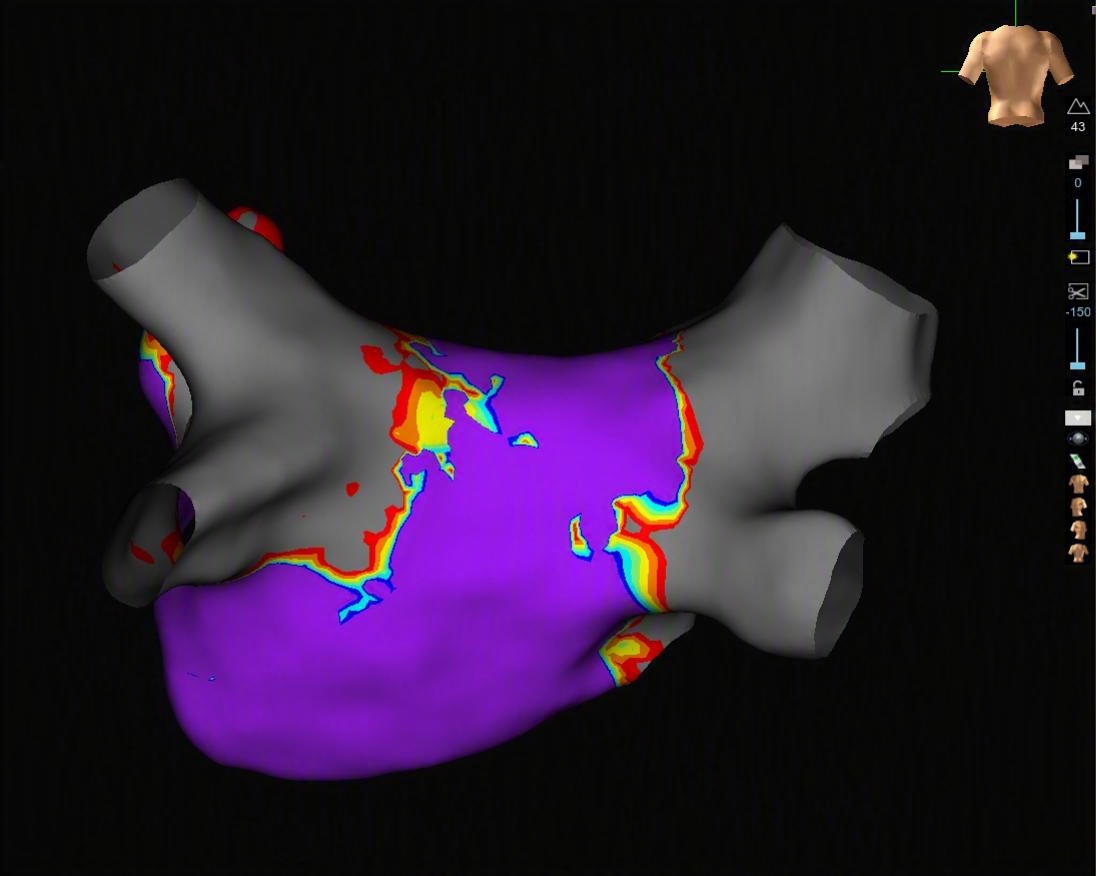
4. Pulmonary vein isolation
The chosen ablation technology creates an electrical barrier between the pulmonary veins and the left atrium. This prevents abnormal electrical impulses arising in the veins from triggering atrial fibrillation.
Successful pulmonary vein isolation (PVI) is the central objective of the procedure.
5. Checking the result
Electrophysiological testing after ablation confirms that the pulmonary veins are electrically isolated.
If an additional, clearly defined arrhythmia is identified, such as typical atrial flutter or an organised atrial tachycardia, it may be mapped and, when indicated, treated during the same procedure.
05Which types of energy are used?+
Several technologies are now available to achieve pulmonary vein isolation.
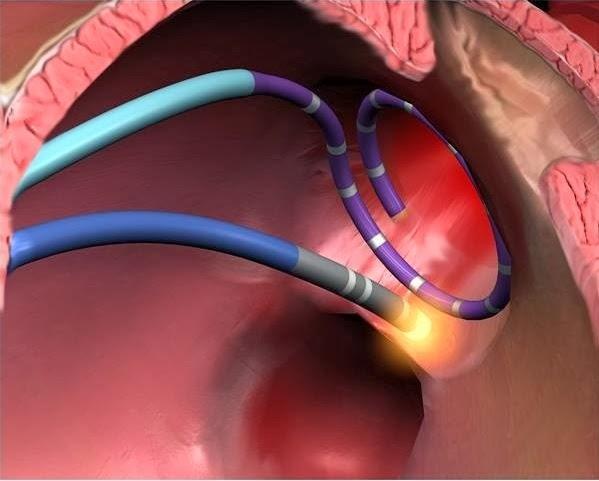
Radiofrequency Ablation
Radiofrequency ablation uses controlled thermal energy.
The catheter delivers a series of precisely placed lesions around the pulmonary veins, creating a continuous area of electrical isolation.
This technique offers:
- a high degree of precision,
- individually tailored mapping,
- flexibility in complex or repeat procedures,
- the ability to treat additional arrhythmogenic areas when specifically indicated.
Cryoballoon Ablation
Cryoballoon ablation uses a specialised balloon positioned at the opening of a pulmonary vein.
Very low temperatures are applied to electrically isolate the vein.
This is an established technique, particularly suited to procedures in which pulmonary vein isolation is the main objective.
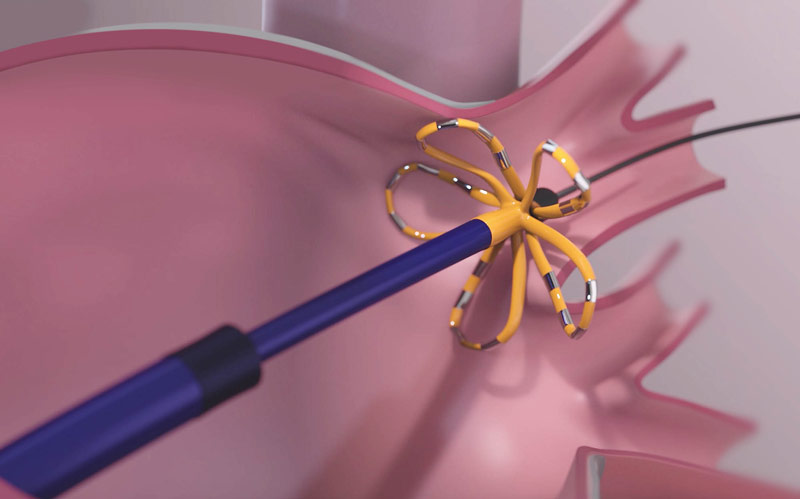
Pulsed Field Ablation – PFA
Pulsed field ablation (PFA) is a newer ablation technology.
Unlike radiofrequency ablation and cryoablation, it does not rely on heating or cooling tissue. It uses very short, high-intensity electrical pulses to produce irreversible electroporation of heart muscle cells.
An important feature is its relative selectivity for heart muscle, with some neighbouring tissues being less sensitive to the applied energy.
PFA is now established as one of the modern technological options for pulmonary vein isolation.
Which technique is most suitable?
No single technique is suitable for every patient.
The choice between radiofrequency, cryoballoon and PFA is tailored to:
- the type of atrial fibrillation,
- the anatomy of the left atrium and pulmonary veins,
- whether this is a first or repeat procedure,
- the need for additional mapping or ablation,
- the patient's individual characteristics.
06Is ablation beyond the pulmonary veins always needed?+
No.
For most first procedures, pulmonary vein isolation is the principal strategy.
Additional ablation may be performed for a specific indication, such as:
- documented typical atrial flutter,
- an organised atrial tachycardia,
- a repeat procedure,
- a particular arrhythmia substrate identified during mapping.
Additional ablation is not performed routinely in every patient; it is tailored to the findings in each case.
07Anaesthesia and duration+
The procedure is performed under deep sedation or general anaesthesia, depending on the technique, the centre's protocol and the patient's characteristics.
It usually takes approximately 1–3 hours, although this varies with the technology used and the complexity of the case.
If the patient is in atrial fibrillation during the procedure, electrical cardioversion may be performed to restore a normal heart rhythm.
08What to expect afterwards+
After the catheters are removed, pressure or a dedicated haemostasis system is applied to the groin.
The patient is monitored for several hours and can usually get up and walk on the same day.
Discharge is usually the following day, provided recovery is uncomplicated.
What is normally expected?
During the first few days, you may experience:
- minor bruising or tenderness in the groin,
- ectopic beats,
- brief episodes of palpitations,
- mild chest discomfort.
These symptoms usually settle gradually.
09Can arrhythmia occur after ablation?+
Yes.
Episodes of atrial fibrillation, atrial flutter or another atrial tachycardia may occur during the first weeks as the heart tissue heals.
This initial phase is known as the blanking period.
An arrhythmia during this period does not mean that the procedure has failed.
Temporary antiarrhythmic medication or electrical cardioversion may be needed, depending on the circumstances.
10Anticoagulation after ablation+
Anticoagulation is continued for at least two months after the procedure, unless there is a specific reason for a different approach.
The subsequent need for long-term anticoagulation is determined mainly by the individual's risk of stroke and thromboembolism.
Successful ablation alone is not a reason to stop anticoagulation.
Any change should be made only after medical assessment.
11What are the success rates?+
The likelihood of success depends on the type and duration of atrial fibrillation and each patient's characteristics.
Paroxysmal atrial fibrillation
Approximately 70–80% of appropriately selected patients may remain free of significant recurrences during the first year.
Persistent atrial fibrillation
Success rates after a single procedure are generally lower, often around 50–60%.
Some patients may need a second procedure, particularly if atrial fibrillation recurs or another atrial tachycardia develops.
These figures are indicative and do not predict the outcome for an individual patient.
12What affects success?+
Factors that may influence long-term success include:
- the type and duration of atrial fibrillation,
- the size and degree of remodelling of the left atrium,
- obesity,
- hypertension,
- sleep apnoea,
- diabetes,
- alcohol consumption,
- heart failure or other structural heart disease.
Managing these factors is an essential part of comprehensive atrial fibrillation treatment and may help reduce recurrences.
13What are the potential risks?+
AF ablation is an established procedure and serious complications are relatively uncommon. However, like any invasive procedure, it carries risks.
Potential complications include:
- a haematoma or bleeding in the groin,
- vascular injury,
- pericardial effusion or cardiac tamponade,
- a thromboembolic event or stroke,
- phrenic nerve injury,
- pulmonary vein stenosis,
- complications related to anaesthesia.
Thermal techniques also carry an extremely rare but serious risk of oesophageal injury.
The potential risks and their likelihood in your particular case are discussed in detail before the procedure.
14Returning to everyday activities+
Recovery after an uncomplicated procedure is usually quick.
Most patients can return to light everyday activities within a few days.
For the first few days, avoid:
- strenuous exercise,
- heavy lifting,
- activities that place significant pressure on the groin.
Returning to work and full exercise is individually planned according to recovery and the type of activity.
15Follow-up after ablation+
Regular follow-up is an important part of treatment.
Depending on the case, this may include:
- clinical assessment,
- an ECG,
- Holter monitoring or another form of prolonged rhythm recording,
- review of antiarrhythmic medication,
- review of anticoagulation,
- management of risk factors associated with recurrent atrial fibrillation.
Some episodes of atrial fibrillation may be asymptomatic. Assessment of the result therefore does not rely solely on whether palpitations are present or absent.
16Frequently asked questions+
Is ablation open-heart surgery?
No. It is performed through catheters introduced via veins in the groin, without surgically opening the chest.
Is the procedure painful?
The procedure is performed under deep sedation or general anaesthesia.
Will I stop antiarrhythmic medicines afterwards?
This depends on your circumstances. Many patients continue treatment temporarily during healing, with a review afterwards.
Could I need a second procedure?
Yes. Some patients may need repeat ablation if the arrhythmia returns.
Is ablation a permanent cure?
For many patients, it provides highly effective, long-term arrhythmia control. However, atrial fibrillation is a progressive condition and can recur even after an initially successful procedure.
17When should I seek urgent medical attention?+
Seek immediate medical assessment after the procedure if you develop:
- severe or worsening chest pain,
- significant breathlessness,
- fainting,
- ongoing bleeding or significant swelling in the groin,
- sudden weakness, numbness or difficulty speaking,
- a high or persistent fever,
- difficulty or pain when swallowing,
- any new significant neurological symptom.
18Individual assessment+
Not every patient with atrial fibrillation has the same likelihood of benefiting from ablation.
Choosing the appropriate treatment strategy requires an individual arrhythmia and electrophysiology assessment, taking into account the type and duration of the arrhythmia, symptoms, heart structure and function, other medical conditions and the patient's treatment priorities.
The aim is long-term maintenance of a normal heart rhythm, reduction of the atrial fibrillation burden and improved quality of life, within a comprehensive, individualised approach to care.